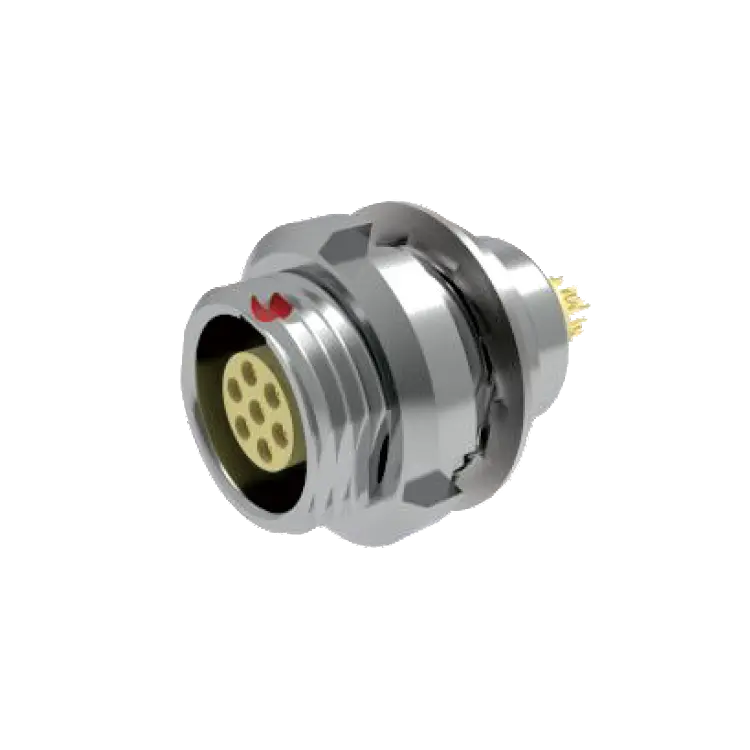
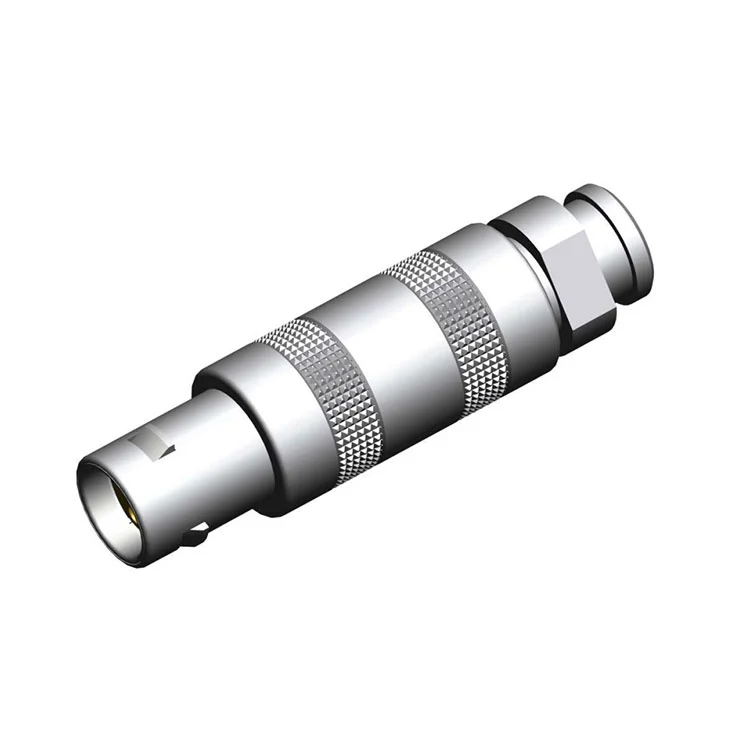
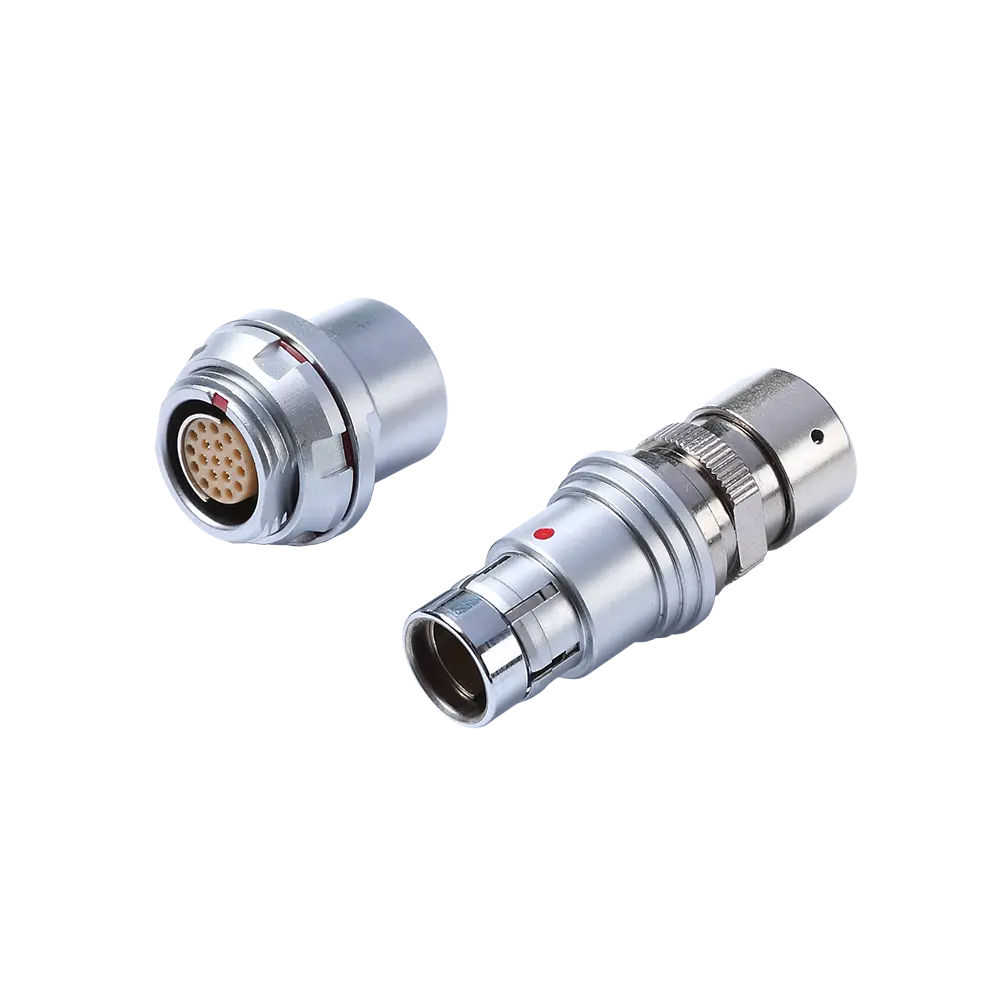
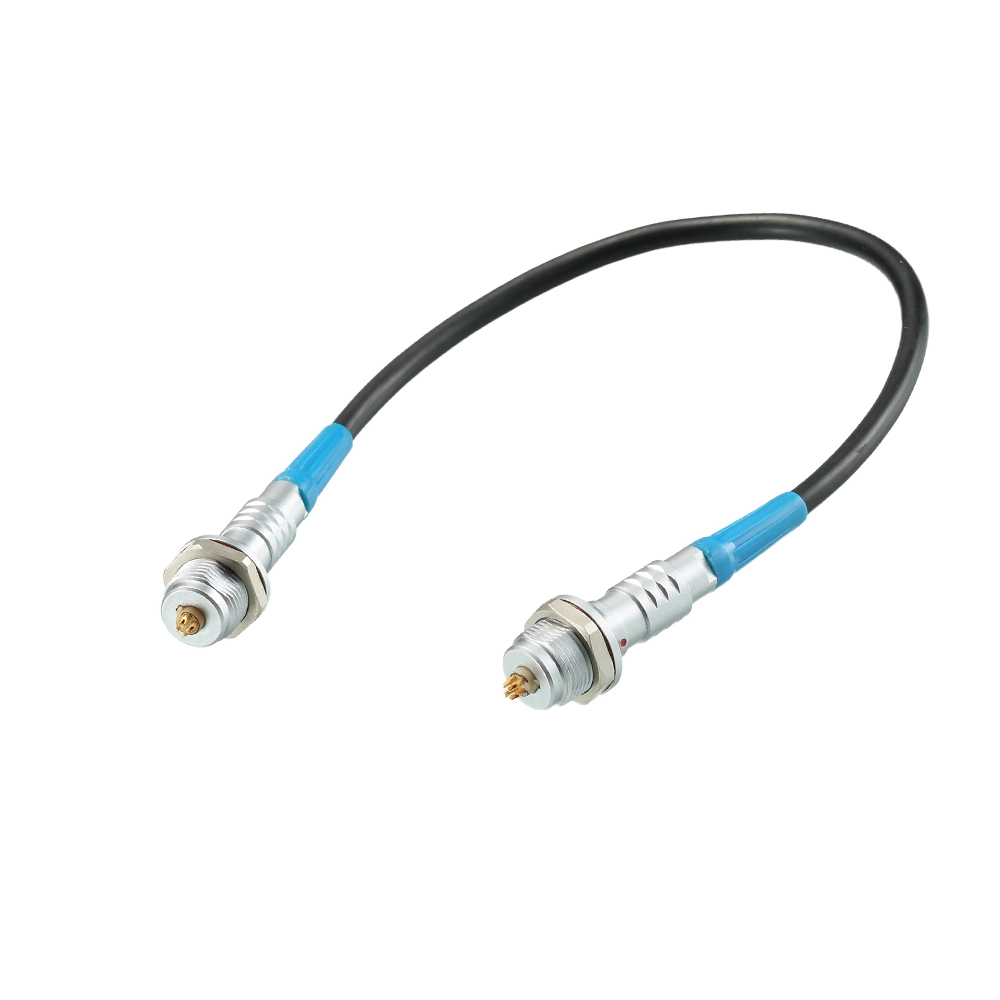
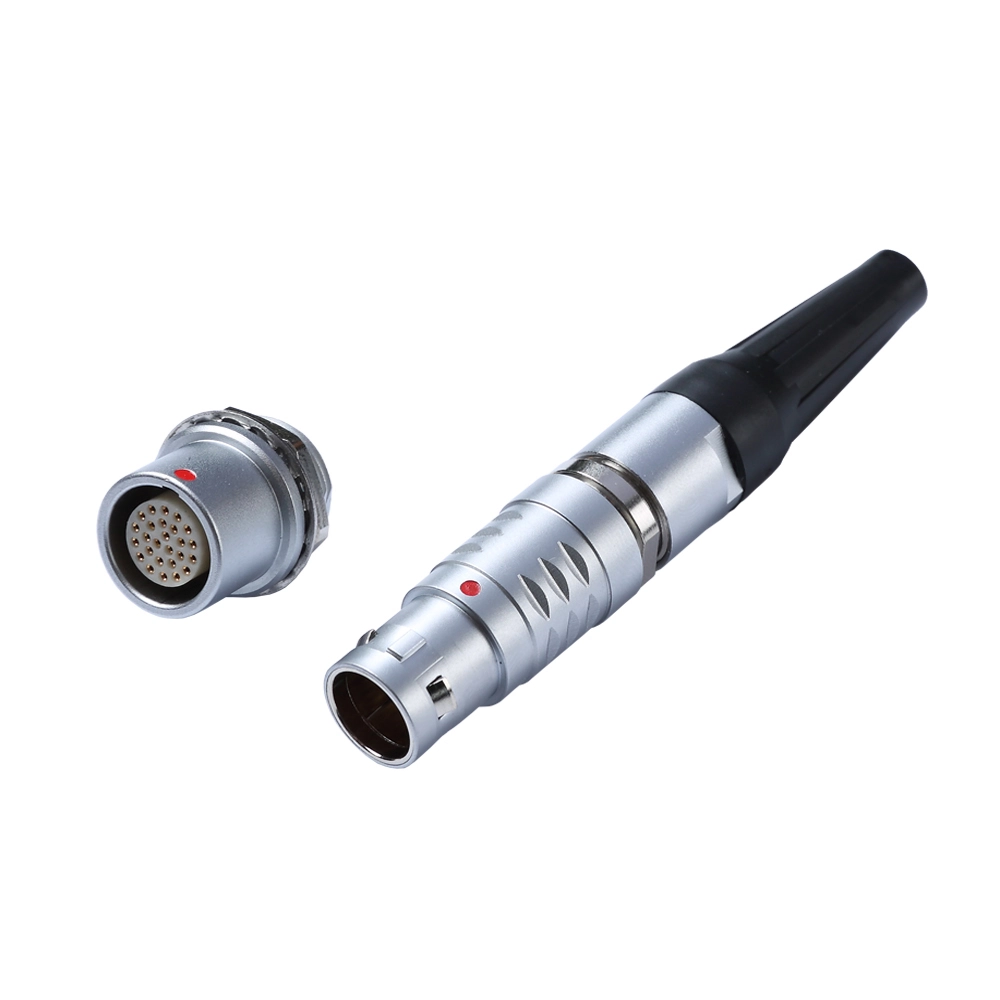
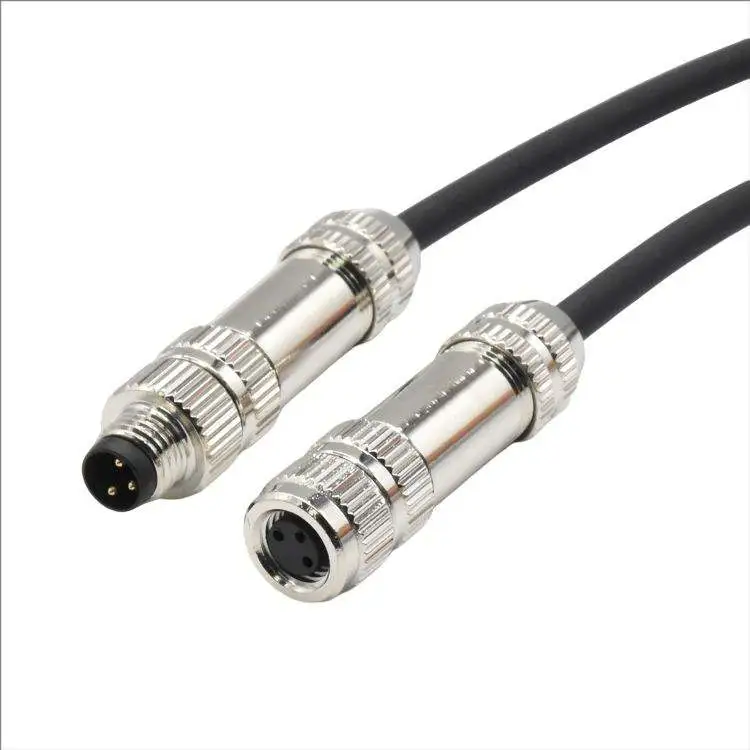
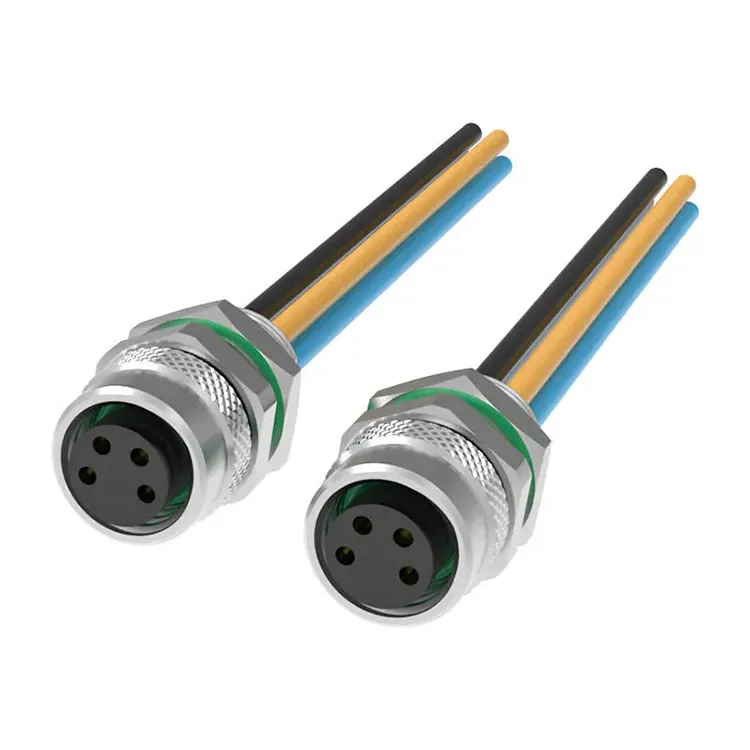
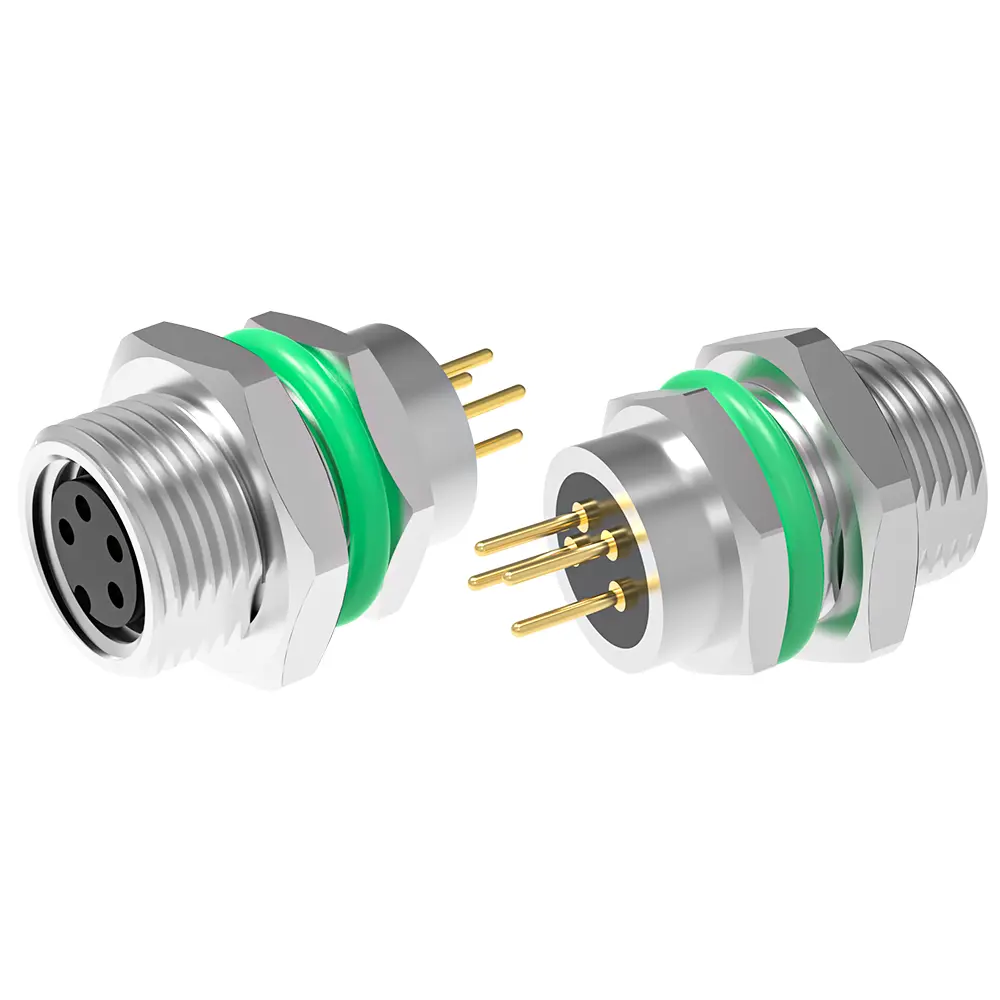
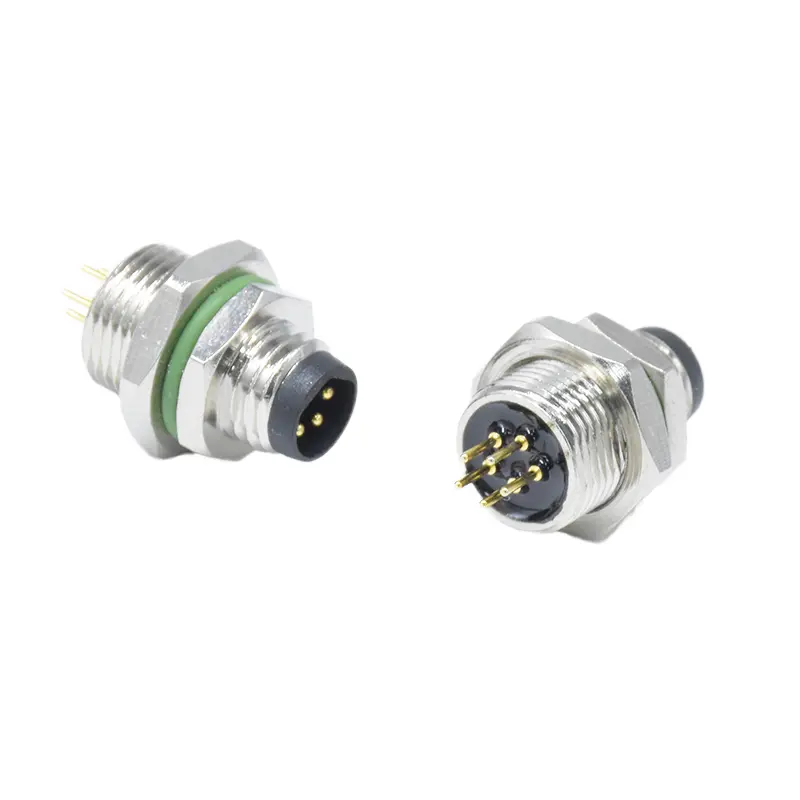
REUNION Electronics supplies the M8 series connector for sensor-level wiring in automated equipment, robotics, and compact machine systems. The threaded interface provides a secure mechanical lock that resists loosening under vibration, while the moderate outside diameter allows installation in spaces too confined for larger circular formats. Field wiring and replacement are simplified by the standard screw coupling, which requires only a simple wrench or hand tightening.
Mechanical Dimensions and Coupling Method
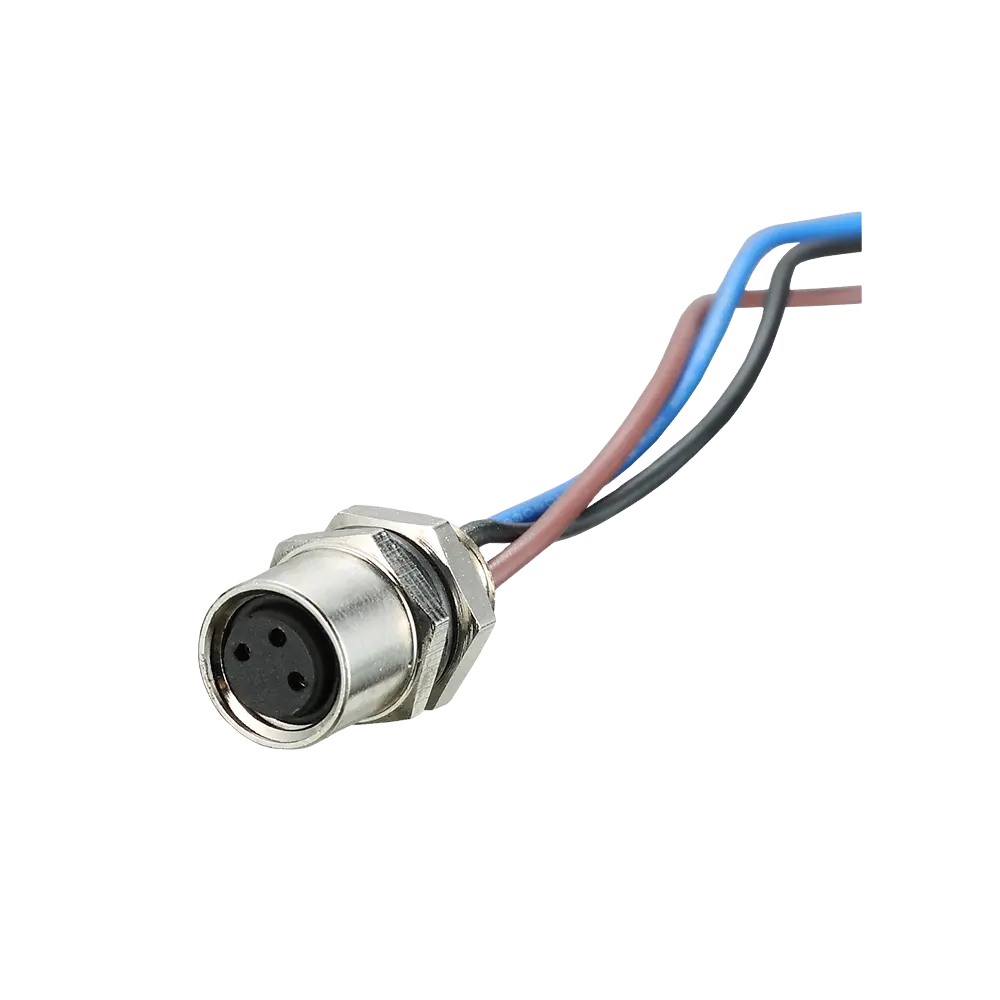
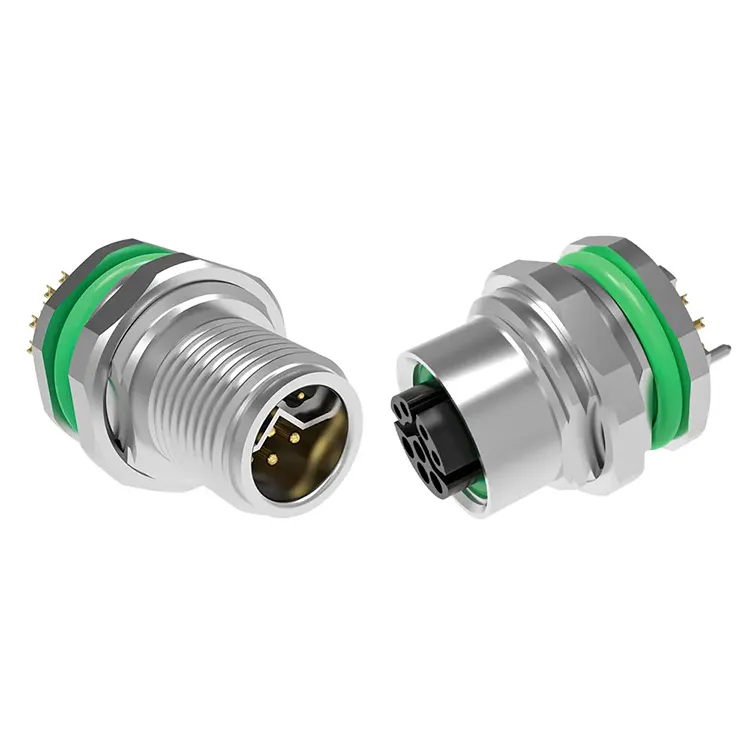
The M8 designation refers to the metric thread size of the coupling nut. This intermediate size sits between the smaller M5 and the larger M12, offering a balance of connection density and current-carrying capacity. The threaded joint distributes mechanical load evenly around the connector body, which reduces the risk of tilted mating or contact damage during connection. Panel-mount receptacles and field-attachable plugs are both available, supporting a range of machine-building and retrofitting scenarios.
Contact Configurations and Current Ratings
Common layouts include 3-pin and 4-pin versions for sensor supply and signal return, with some variants offering additional positions for shielded or multi-channel use. Typical current ratings fall between 3 A and 4 A per contact, depending on wire gauge and ambient temperature. These values support the majority of proximity sensors, photoelectric switches, and low-power valve controls found in modern production lines. For applications requiring higher power or more conductors, the M12 Series Connector provides a wider contact space and broader standardization.
Sealing Options and Field Environments
Sealed M8 versions use O-rings at the coupling interface and cable entry to achieve IP67 protection against dust and water jets. This level of sealing is frequently specified for connections on machine frames, robotic arms, and conveyor systems that experience periodic washdown or coolant splash. Unsealed designs are still common inside control cabinets and dry equipment interiors. For more demanding exposure conditions, the Waterproof Connector category explains ingress protection ratings and test criteria in greater detail.
Production Support and Custom Cable Assemblies
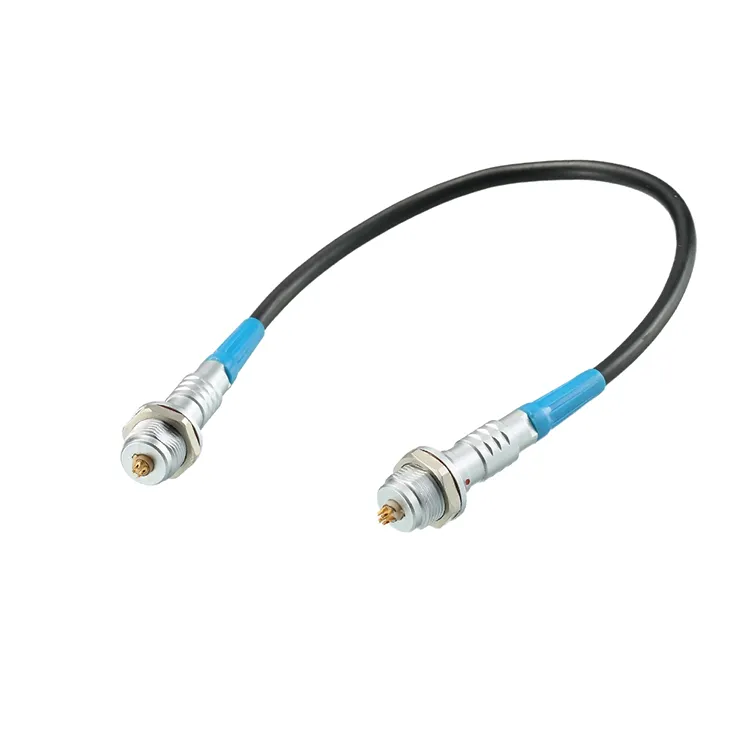
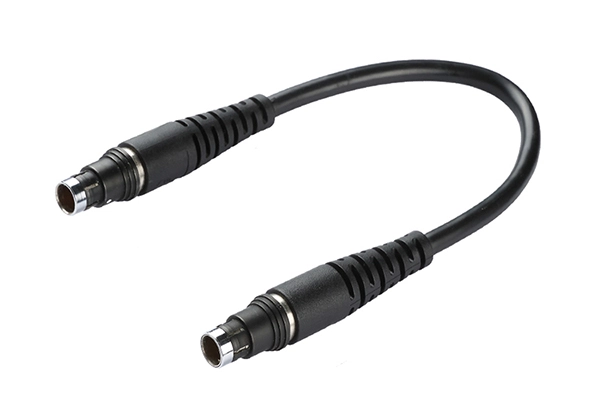
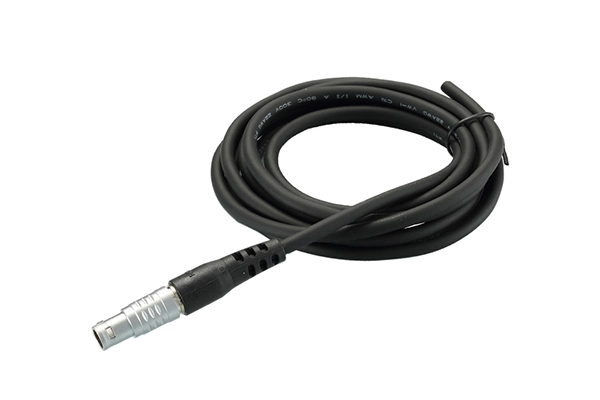
REUNION operates a 4,000-square-meter facility in Shenzhen with approximately 150 employees and 10 assembly lines. The engineering team, supported by 13 patents and 2 software copyrights, handles over 30 customized connector projects each year. Requests for angled M8 housings, specific keying orientations, or overmolded cable exits are evaluated during the design review. Finished Cable Assembly units, including wire preparation and electrical testing, are produced in-house to reduce integration work at the customer’s site.
Quality Control and Batch Traceability
The company’s quality management follows ISO 9001 and ISO 14001, with ISO 13485 applied to medical-related connector lines. Compliance testing is performed according to UL, CB, and CQC standards where applicable. Incoming materials are verified against approved supplier documentation, and each production batch is recorded in the ERP system. Final inspection includes continuity, insulation resistance, and dimensional checks before shipment.
Frequently Asked Questions
How do I decide between an M8 and an M12 connector?
The choice depends primarily on current requirement, conductor count, and available mounting space. M8 connectors suit sensor-level signals and low-power devices where panel density is important. M12 connectors handle higher current, more pins, and are more standardized across industrial Ethernet and fieldbus systems.
What pin counts are standard for M8 connectors?
Three-pin and four-pin configurations are the most common. Some suppliers also offer five-pin versions for specific sensor functions or shielded applications. REUNION can confirm the exact contact arrangement based on the sensor or I/O module being connected.
Can M8 connectors be supplied with angled or field-attachable housings?
Yes. REUNION produces straight and angled variants, including field-attachable plugs for on-site wiring and overmolded versions for pre-terminated cable assemblies. Custom keying and cable lengths are available for OEM projects with defined installation requirements.